Global archaeologists, researchers, and scientists have confirmed that Kurdistan is the cradle of civilization and the mother of the world. The discovery of the highly significant Zagros site, Girê Mirazan (Göbekli Tepe)—dating back 12,000 years—has fundamentally redrawn the historical map of humanity. The evidence uncovered at Girê Mirazan is not merely a historical find; it is more paramount than all other historical evidence combined, as it fundamentally alters the global understanding and definition of "civilization." In this article, we provide a detailed analysis of why this discovery serves as the most compelling evidence in human history.
Kurdistan: The Nucleus and Cradle of Civilization
(The Evidence Shattering All Previous Historical Narratives, Probabilities, Scenarios, and Scientific Perspectives، Girê Mirazan)
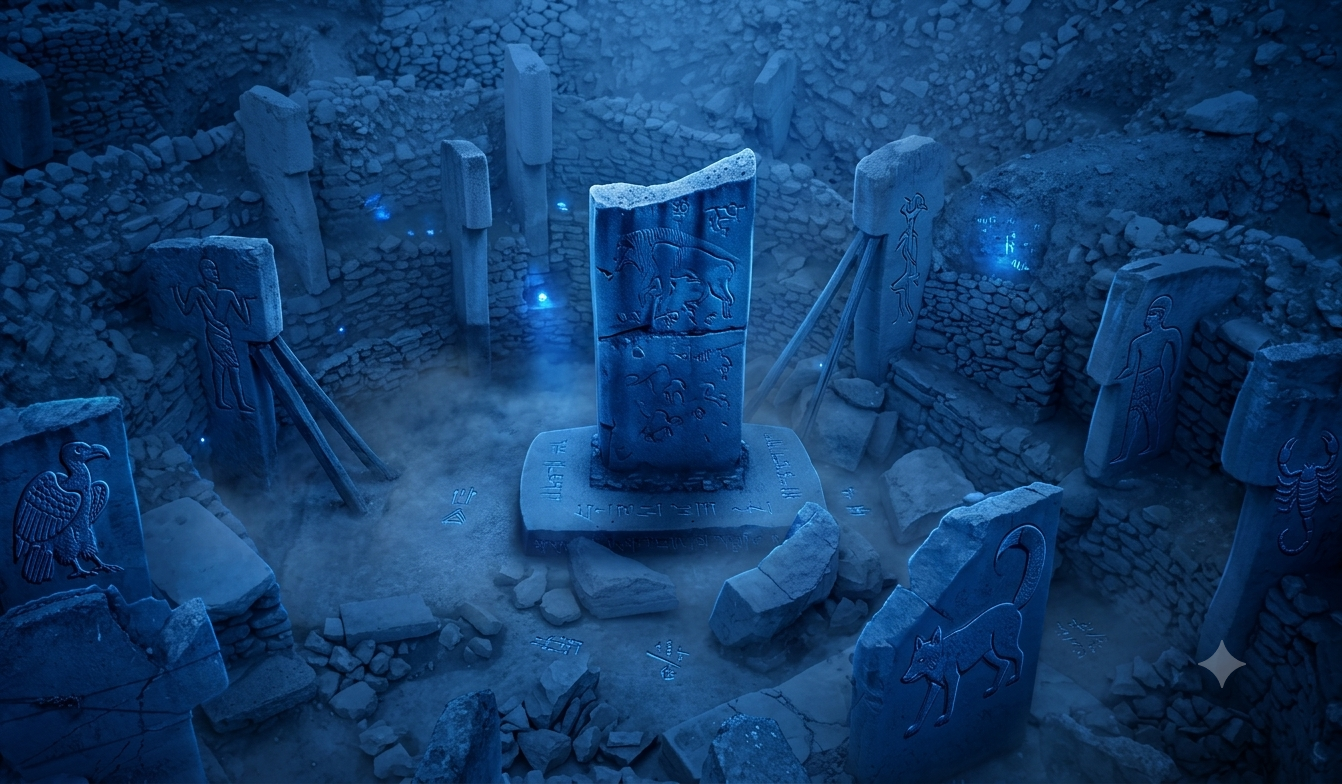
For successive generations, the world was taught that civilization began in the plains of Mesopotamia around 6,000 to 7,000 years ago (with the advent of writing). However, Girê Mirazan (an archaeological site in Ruha, Northern Kurdistan, in the village of Xirabreşk, dating back 12,000 years) has entirely shattered all prior historical frameworks.
First: Breaking the Chronological Barrier (The Absolute Emergence of 12,000 Years)
The primary strength of this evidence lies in its absolute chronological supremacy. This historical site predates agriculture and the establishment of villages, emerging well before what is known as the "Agricultural Revolution." This implies that our ancestors did not construct this monument after settling in villages; rather, they first built the center of Girê Mirazan and subsequently settled around it. This completely dismantles the traditional chronological sequence of history.
Older than the Pyramids: This monument is approximately 7,000 years older than the Egyptian Pyramids and predates any known religious or structural site in Europe and Asia. No other evidence in the world matches its antiquity and complexity.
Second: Breaking the Complexity Barrier (Civilization Preceding Necessity)
This discovery proves that our ancestors possessed advanced intellectual and spiritual consciousness long before it was dictated by the sheer necessity of survival. It represents a civilization born of consciousness. The builders of this site had no urgent physical need to construct a monument of such magnitude and architectural grandeur; instead, they built it for complex purposes related to spiritual depth, human existence, and cosmology. This proves that civilization originated from the mind, intellect, and the profound, exceptional understanding of our ancestors, rather than solely from material survival needs (such as food and drink).
Cosmology as a Cornerstone of Understanding: Compelling evidence indicates the site was a center for planetary and cosmological observation (as reflected in its inscriptions and structures). It proves our people were not merely "surviving" but were deeply engaged in cosmic sciences and the origins of human creation, laying the foundation of civilization upon profound sacred knowledge. The complex architecture of vast structures and precise artistic sculptures indicates an advanced civilization and social organization capable of managing and directing massive resources—the fundamental definition of civilization.
Third: The Strongest Evidence: Genetic Continuity
What makes Girê Mirazan stronger than any other evidence is the genetic connection that validates our indigenous ownership.
Genetic Heritage Memory: Linking the DNA of the founding ancestors to the continuous, unbroken current Kurdish population in the region—as confirmed by scientists—eradicates any room for historical dispute. American Harvard University studies, conducted over six years (2016–2022) and published in two comprehensive reports, prove that the first farmers of the Zagros are our direct ancestors. Despite the shifting of historical empires, we continue to carry the same unaltered bloodline. This is not fabricated glory; we are the direct biological continuation and bear the responsibility to protect this legacy.
It is scientifically proven that the Kurdish nation is the primary, continuous sovereign nucleus of life in the region. Subsequent discoveries (such as early wheat fields, animal domestication zones), alongside the unearthing of ancient bakeries, fermented barley (early beer), and the remains of over 70 types of grain, prove that the Zagros Mountains are the "genetic centers" of agriculture and humanity's bakery. This demonstrates that this civilization was not a coincidence; it emerged and flourished on our land before radiating to the rest of the world